








A handheld laser welder gives fabricators a flexible way to join metal without building an automated welding cell around every part. The operator guides a compact welding head along the joint while the laser supplies concentrated heat.
Its appeal goes beyond a neat bead. In a busy workshop, faster seam production and less finishing work free up time for the next assembly. Multifunction models also add cleaning and cutting, bringing several everyday tasks into one machine.
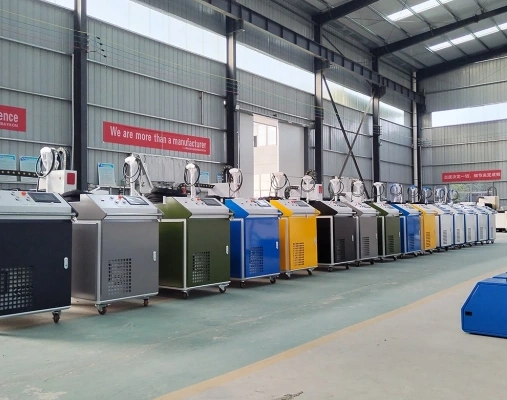
What Is a Handheld Laser Welder?
As the name suggests, a handheld laser welding machine is a piece of welding equipment that requires manual operation. It is capable of performing laser welding on large workpieces or over longer distances. During the welding process, the heat-affected zone is minimal, preventing issues such as workpiece deformation, discoloration, or visible marks on the reverse side. Furthermore, it offers deep penetration and strong, thoroughly fused welds; there is no depression at the junction where the weld bead meets the base material.
How Does Handheld Laser Welding Work?
The laser source generates a beam, which travels through an optical fiber to the welding head. Focusing optics concentrate it at the joint.
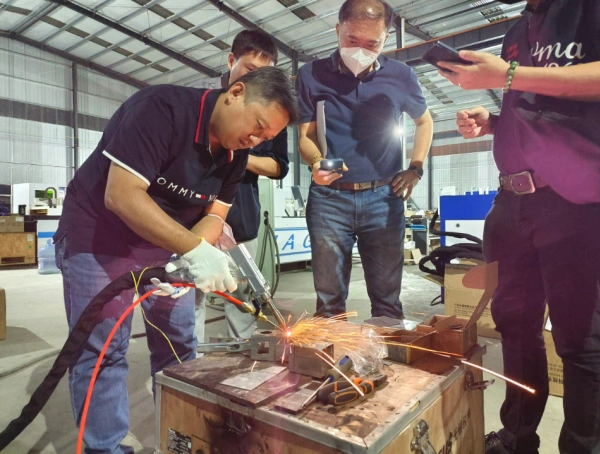
The operator first sets the appropriate parameters on the touchscreen based on the material to be welded and its thickness. The control system then issues a command, causing the laser to generate a beam that is transmitted through an optical fiber to the welding head. The welding head focuses the laser beam and controls its path, directing it onto the workpiece surface to form a high-temperature molten pool. Once the molten pool has cooled and solidified briefly, the welding process is complete.
Main Components of a Handheld Fiber Laser Welding Machine
A handheld fiber laser welding machine works as a complete system. Its main components have distinct jobs.
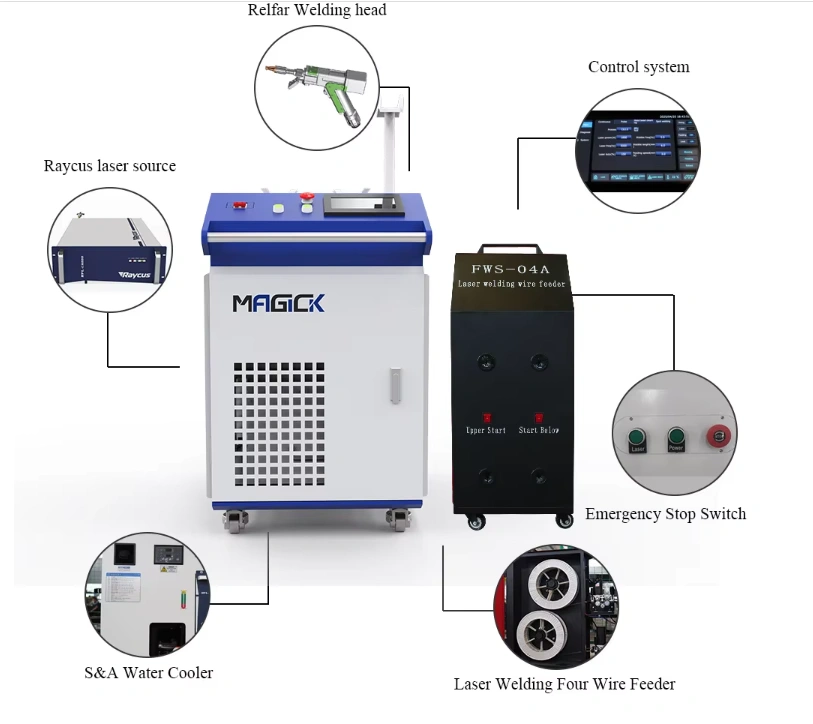
For a handheld fiber laser welder, head weight and cable handling deserve attention alongside source power. Hold the head in the positions your actual parts require.
What Materials Can Handheld Laser Welding Machines Weld?
Laser welding is primarily used for the rapid welding of thin sheets and can be applied to the welding of stainless steel sheets, carbon steel sheets, aluminum sheets, and galvanized sheets and tubes.
Handheld Laser Welder Functions
Handheld Laser Welder and Cleaner
A handheld laser welder cleaner combines welding with a surface-cleaning mode. It removes surface rust and oxides from compatible workpieces and supports preparation around the joint.
Handheld Laser Welder and Cutter
A handheld laser welder cutter adds a cutting mode with the appropriate nozzle, gas delivery and settings. It handles tasks such as short cuts, trimming and local modifications within its rated capacity.
A handheld laser welding and cutting machine is useful when occasional cutting supports the main fabrication job. Taking carbon steel plates as an example, a MAGICK 4-in-1 handheld welder can typically cut carbon steel with a thickness of about 6 mm to 10 mm consistently.
Wire-Fed Handheld Laser Welding
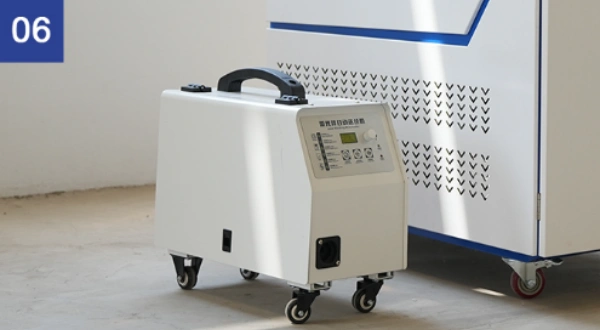
The primary function of a wire feeder is to continuously, stably, and precisely feed welding wire to the welding gun (weld pool) during the welding process according to preset parameters, thereby replacing or assisting manual wire feeding. Welds produced using a wire feeder are fuller and more robust.
Handheld Laser Welder Advantages and Limitations
The main handheld laser welder advantages are concentrated heating, flexible access and efficient seam production. On well-prepared repeat work, these features reduce time spent welding, straightening and finishing.
The machine also keeps the operator close to changing assemblies. There is no robot path to reprogram for every small batch.
The handheld laser welding limitations are equally practical. Fit-up and hand movement affect consistency. Equipment and laser safeguarding add cost. A compact head does not remove the need for a controlled work area.
Measure improvement across the complete job. Loading, repositioning, cleaning and inspection remain part of production time.
How to Choose a Handheld Laser Welding Machine
Laser Power and Material Thickness
| Power / Material | Aluminium | Stainless Steel | Carbon Steel |
|---|---|---|---|
| 1000W | ≤2mm | ≤4mm | ≤4mm |
| 1500W | ≤3mm | ≤5mm | ≤5mm |
| 2000W | ≤4mm | ≤6mm | ≤6mm |
| 3000W | ≤5mm | ≤8mm | ≤8mm |
| 6000W | ≤10mm | ≤12mm | ≤12mm |
Air-Cooled vs Water-Cooled Systems
Air-Cooled Welding Machine: Suitable for low- to medium-power handheld laser welding, particularly for processing stainless steel and carbon steel sheet metal, as well as for applications requiring flexible mobility, such as small-scale manufacturing facilities, equipment maintenance, and on-site construction.
Water-cooled welding machines: Suitable for industrial applications requiring long periods of continuous operation and stable production, such as high-power laser welding, thick-plate metal processing, automotive parts manufacturing, and sheet metal fabrication.
Explore MAGICK handheld laser welding machines to compare the available configurations.
Welding, Cleaning and Cutting Configuration
Put the required functions in the quotation.
For a handheld laser welder cleaner, specify cleaning optics, scan width and surface-preparation tasks. For a handheld laser welder cutter, specify the cutting nozzle, gas requirements and demonstrated cutting capacity.
Confirm the mode-change procedure and included accessories. Have the supplier demonstrate the changeover so you can see the setup time and parts involved.
Frequently Asked Questions
Is a Handheld Laser Welder Easy to Use?
Preset functions streamline the process; with a MAGICK handheld welding machine, you can become a seasoned welder in just 10–30 minutes.
Does a Handheld Laser Welder Require Filler Wire?
No. Tightly fitted joints can be welded without filler material.
Can a Handheld Laser Welder Cut Metal?
Yes. In actual machining operations, the 6kW handheld 4 in 1 laser welding machine can typically only reliably cut thin metal sheets with a thickness of approximately 3 to 6 mm.
What Safety Equipment Does Handheld Laser Welding Require?
High-power handheld laser equipment is Class 4. Direct and reflected beams require a controlled laser area, suitable beam containment and access controls.
A qualified laser-safety professional should specify interlocks, wavelength-appropriate eye and face protection, protective clothing and operating procedures. Fume extraction is also essential. An ordinary arc-welding helmet alone is not adequate laser protection.
The American Welding Society’s handheld laser welding safety resources provide guidance for planning the installation and training. American Welding Society
Conclusion
Choose a handheld laser welder around the work that fills your week. Bring an unfinished assembly to the demonstration and check the awkward corner, the longest seam and the required finish.
If cleaning and cutting are part of the purchase, include both in the demonstration and time the changeovers. Send MAGICK your material, thickness and joint requirements to discuss a configuration against that actual workload.