
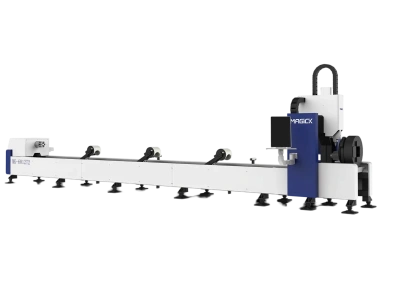
Tube laser cutting machine is an automatic metal cutting machine that uses focused high-energy laser beam to quickly and accurately cut tubes and structural profiles. Different from flat-bed laser cutter, it comes equipped with a chuck and a rotary axis to clamp and rotate workpieces, while the workpiece, itself, is clamped in position by the laser cutting head that moves in its own length.
Depending on the types of laser cutting machines, the tube laser cutter can process round tubes, square tubes, rectangular tubes, angle steel, channel steel, I-beams, H-beams and so on, structural profile materials; also, it can process cutting, hole-making, slotting, trimming and other complicated contouring processing in a single setup.
For companies who use metal tubes as their structural parts, tube laser cutting can save the labor layout, drilling and other manual after-processing steps, and improve the consistency of production
What Is a Tube Laser Cutting Machine?
A tube laser cutting machine is a type of CNC laser machine specifically aimed at processing metal tubes and profiles. A tube laser cutting machine includes the fiber laser source, laser head, chuck, rotary axis, motion system and the tube-cutting software to complete 3D cutting. The workpiece is clamped by one or more chucks and is being rotated while the machining is being done. At the same time, the laser head moves along the tube and follows the path defined by cutting path programming. The simultaneous movement of the two allows the machine to reach different sides of the workpiece without repeatedly repositioning the workpiece by hand.
Special tube-cutting software such as CypTube or the applicable Cyp Tube cutting software can be used to prepare cutting layouts, to generate cutting toolpaths and to direct the movement of the cutting head and rotary axis.
What Types of Tubes and Profiles Can It Cut?
The exact processing range depends on the machine model, chuck capacity, laser power, profile dimensions, and support configuration. Common workpieces include:
- Round tubes
- Square tubes
- Rectangular tubes
- Angle steel
- Channel steel
- I-beams
- H-beams
- Other custom-shaped structural profiles
Tube laser cutting machines are commonly used to process carbon steel, stainless steel, aluminum, and other metal materials. The suitable material thickness and cutting speed should be confirmed according to the machine’s laser power and process parameters.
Closed-section tubes, such as round and square tubes, are generally easier to load and support automatically. Open structural profiles, such as angle steel, I-beams, and H-beams, require more careful consideration of clamping, support, rotation clearance, loading, and software compatibility.
How Does a Tube Laser Cutting Machine Work?
The tube laser cutting process usually includes the following steps.
1. CAD Design and CNC Programming
The operator imports or creates the part drawing in the tube-cutting software. The software generates the cutting path and coordinates the linear movement of the cutting head with the rotation of the workpiece.
2. Loading the Tubes
Depending on the machine configuration and production requirements, the tube or profile is manually, semi-automatically or automatically put on the machine.
3. Clamping and Positioning
The chuck system securely clamps the workpiece and helps position it along the machining axis. Proper clamping is important for maintaining stability and reducing movement during cutting.
4. Rotation and Feeding
The rotary axis turns the tube to expose different sides of the workpiece to the laser beam. The motion system also feeds the workpiece or moves the cutting head along its length.
5. Laser Cutting
The laser source produces a focused beam. The cutting head focuses the beam on the surface of the material. The programd path may include: external contours, holes, slots, notches and other features .
6. Assist Gas and Slag Removal
Assist gas can be oxygen, nitrogen or compressed air. The gas assists in the removal of molten material from the kerf and can influence the quality of the cut, the condition of the edge and the efficiency of the process.
7. Unloading
After cutting, the finished parts and remaining material are removed manually or through an automated unloading system.
What Are the Main Components of a Tube Laser Cutter?
| Component | Main Function |
|---|---|
| Machine bed | Supports the main assemblies and provides rigidity and vibration resistance. |
| Chuck system | Clamps and rotates the tube or profile during cutting. |
| Laser cutting head | Focuses the laser beam and performs cutting, hole making, and slotting. |
| Gantry and slide | Guides the cutting head along the workpiece. |
| Guide rails and drive system | Provide stable and accurate movement through components such as linear guides, racks, and servo drives. |
| Rotary axis | Controls the rotation of the chuck and workpiece. |
| Follow-up support | Supports long or heavy workpieces and helps reduce sagging, vibration, and deformation. |
| Loading and unloading system | Transfers raw material into the machine and removes finished parts. |
| Laser source | Produces the laser beam used for cutting. Fiber lasers are commonly used for metal tube cutting. |
| CNC control system | Controls the cutting path, speed, power, rotation, and coordinated machine movement. |
| Assist-gas system | Supplies oxygen, nitrogen, or compressed air for the cutting process. |
| Chiller | Maintains the required operating temperature for the laser source and related components. |
Among these components, the chuck system, cutting head and motion system, machine bed and support system, and loading system have a particularly strong influence on cutting performance.
What Cutting Operations Can a Tube Laser Cutter Perform?
A tube laser cutting machine can perform more than simple length cutting. Depending on the cutting head, software, and machine configuration, it can be used for:
- Cutting tubes to a specified length
- Cutting round, square, and rectangular holes
- Creating slots and openings
- Producing notches for tube connections
- Cutting angled or shaped tube ends
- Processing complex contours
- Preparing components for welding and assembly
- Producing repeatable structural parts from a single tube or profile
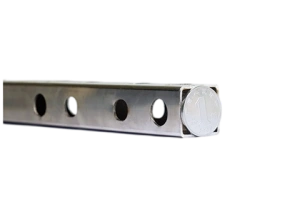
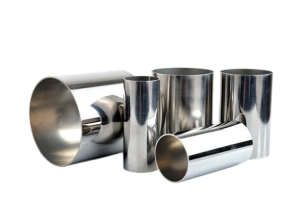
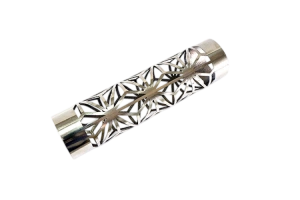
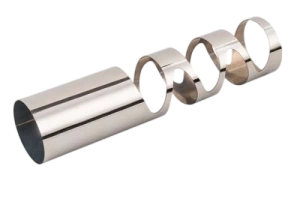
By combining tube rotation with linear movement, the machine can complete many of these operations in one setup. This can reduce the need for separate drilling, milling, manual marking, and other preparation steps.
Tube Laser Cutting for H-Beams and Other Structural Profiles
Cutting H-beams, I-beams, angle steel, and other open profiles requires more than simply increasing laser power. The machine configuration must be matched to the profile geometry, weight, dimensions, and rotation behavior.
Important considerations include:
- Chuck clamping range and load capacity
- Available clearance during rotation
- Profile support method
- Loading and feeding method
- Tube-cutting software compatibility
- Workpiece length and weight
- Laser power and cutting-head configuration
Open profiles change their height and support position as they rotate. For this reason, a support system designed only for round or square tubes may not be suitable for H-beams or I-beams.
Semi-Automatic and Fully Automatic Loading Systems
The right loading system depends on the type and variety of material being processed.
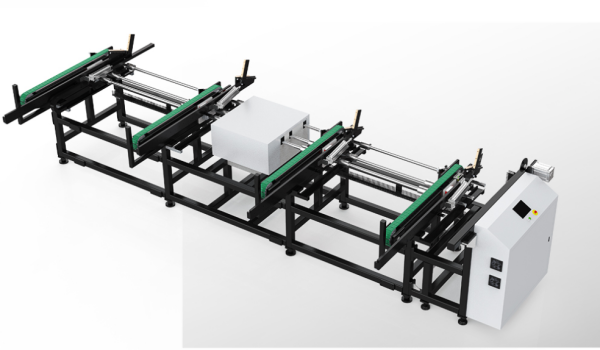
Semi-Automatic Loading for Mixed Tubes and Profiles
A semi-automatic loading system can be matched with two-chuck tube laser cutting machines. It is suitable for production that includes different types of workpieces, such as round tubes, square tubes, angle steel, and I-beams.
Depending on the configuration, the system can support automated material loading and feeding while allowing greater flexibility for different profile shapes. It is a suitable solution for manufacturers that process mixed materials or open structural profiles.
For H-beams, I-beams, angle steel, and other irregular profiles, a semi-automatic loading solution is generally more flexible than a standard fully automatic system designed for one closed tube shape.
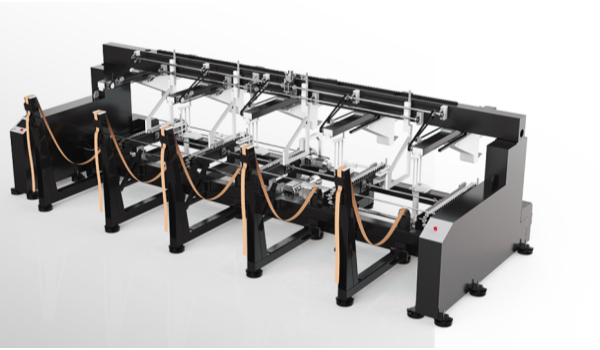
Fully Automatic Loading for Standardized Tube Production
A fully automatic loading system is designed for the storage, loading, and feeding of a single type of tube. It is mainly suitable for closed-section tubes such as round and square tubes.
This configuration can improve production continuity and reduce manual handling when the same or similar tube type is processed repeatedly.
However, it is not automatically suitable for every open profile. The supported profile range and storage method should be confirmed before selecting the system.
Adjustable Roller Support vs. Motorized Follow-Up Support
Support selection is especially important when processing long, heavy, rectangular, or irregular workpieces.
Adjustable-Diameter Roller Support
An adjustable-diameter roller support is positioned according to the diameter or size of the workpiece. Once adjusted, the roller itself does not move vertically during rotation.
This type of support can be suitable for round tubes and square tubes with relatively regular dimensions. However, rectangular tubes and structural profiles may have significantly different vertical and horizontal dimensions during rotation. In these cases, the workpiece may rub against the roller or experience unstable support.
Motorized Follow-Up Support
A motorized follow-up support is employed to move up and down with the workpiece rotation by a motor driven mechanism. It gives a more flexible support and is suitable for a wider range of profile shapes.
For rectangular tubes, H-beams, I-beams, angle steel and other irregular profiles, a motorized follow-up support can provide better stability than a fixed position roller support. The actual supported size, weight and profile range still depend on the machine configuration selected.
As a general rule in selection:
An adjustable roller support may be used for round and square tubes with stable dimensions.
For long or heavy profiles and for rectangular tubes, adaptive follow-up support is beneficial.
For the geometry of the profile and the machine, open profiles such as H-beams, I-beams, angle steel etc. must be equipped with a motorized follow-up support.
What are the Advantages of Laser Cutting of Tubular Materials?
High Cutting Precision
The CNC system coordinates the cutting head, chuck and rotary axis to produce consistent holes, grooves, contours and tube ends.
Reduced Secondary Operations
Laser cutting of tubular materials can reduce the need for manual nesting, drilling, milling and preparation work. The amount of post-processing required still depends on the material, the design and the end application.
Flexible Production
A single machine can process tubes of different shapes and cross-sections, making it ideal for manufacturers who need to handle a wide range of products or fulfil bespoke orders.
Improved Production Efficiency
Automatic feeding, coordinated rotation and single-step machining reduce cycle times and improve production efficiency.
Better Repeatability
Once the program and process parameters have been verified, the CNC system is able to reproduce the same part geometry more consistently than manual processing.
Easier Automation Integration
Tube laser cutters can be fitted with semi-automatic or automatic loading and unloading systems according to the type of material, production volume and the workflow required.
Tube Laser Cutting Machine vs. Sheet Laser Cutting Machine
| Comparison | Tube Laser Cutting Machine | Sheet Laser Cutting Machine |
|---|---|---|
| Main workpieces | Tubes and structural profiles | Flat metal sheets |
| Main movement | Linear movement combined with workpiece rotation | Movement across a flat cutting table |
| Core components | Chuck, rotary axis, tube support, tube software | Cutting table, gantry, sheet support, nesting software |
| Typical operations | Hole cutting, slotting, notching, angled cutting, contour processing | Outer contour cutting, internal holes, and sheet nesting |
| Typical applications | Frames, pipes, furniture, fitness equipment, structural parts | Sheet-metal enclosures, panels, brackets, and flat components |
Applications of Tube Laser Cutting Machines
TubLaser tube cutting machines are widely used in the construction, fitness equipment, furniture, display racks, automotive parts, logistics equipment, agricultural machinery, and advertising products industries. They are used to manufacture frames, support components, brackets, railings, shelving, carts, protective devices, sign structures, and other custom parts. Depending on the material and equipment specifications, they can achieve precise drilling, cutting, and consistent machining results
How to Choose the Right Tube Laser Cutting Machine
When you want to buy a machine, please take the specifications below into comparison.
1. Profile type : Decide whether you want a machine for closed sections, open sections, or they are of mixed kind.
2. Profile sizes : Check maximum diameter, width, height, length, and wall thickness.
Type and thickness of material : Make sure that the laser power and the head are set according to the type of production.
3. Pawer capacity : Make sure that the clamping range, capacity of loading operation, and compatibility with the workpiece are suitable.
4. Structure of support : Decide whether you need adjustable roller support or motorized support with respect to profile types.
5. Loading type : Choose either semi-automatic loading for mixed production sections or fully automatic loading for closed sections.
6. Number of produced items : Decide whether you need the machine for prototypes, small-batch production, or continuous manufacturing.
7. Software and help : Make sure that the machine comes equipped with the right tube cutting software and that it provides with the operator training, help, and spare parts.
Manufacturers producing H-beams, I-beams, angle steel, or any other shaped products should evaluate the machine as a whole; for that laser power is not the only unit for consideration. Specific characteristics of chuck, support structure, loading and rotating, along with the software should correspond exactly to the use of the machine.
Frequently Asked Questions
What is a tube laser cutting machine?
A tube laser cutting machine is a CNC-controlled system that uses a focused laser beam, a chuck, and a rotary axis to cut metal tubes and structural profiles.
Can a tube laser cutter process H-beams and I-beams?
It can, when the machine is equipped with a suitable chuck system, support system, loading solution, and software. The maximum profile size and weight depend on the specific machine configuration.
Which loading system is suitable for H-beams and other open profiles?
A semi-automatic loading system matched with a suitable two-chuck machine is generally more flexible for mixed profiles such as H-beams, I-beams, and angle steel. Standard fully automatic loading systems are mainly designed for single types of closed-section tubes, such as round and square tubes.
What is the difference between an adjustable roller support and a motorised tracking support?
Adjustable roller supports require manual positioning and are typically suitable for round or square tubes. Motorised tracking supports move in synchronisation with the rotation of the workpiece, providing more adaptable support for rectangular tubes and irregular structural profiles.
Can a tube laser cutting machine process square and rectangular tubes?
Yes. Square and rectangular tubes are common tube laser cutting applications. The required chuck range, support system, and cutting parameters depend on the profile size and material.
What is the difference between a tube laser cutter and a pipe laser cutter?
The terms are often used interchangeably. In many manufacturing contexts, “tube laser cutter” refers to equipment that can process not only round pipes but also square, rectangular, and structural profiles.
Conclusion
A tube laser cutting machine is more than a laser source and a cutting head. Its performance depends on the coordinated operation of the chuck, rotary axis, motion system, support system, loading equipment, CNC control, and cutting software.
For round and square tubes, a standard configuration with adjustable roller support and automatic loading may be sufficient. For rectangular tubes, H-beams, I-beams, angle steel, and other structural profiles, a motorized follow-up support and a flexible semi-automatic loading system may provide better stability and adaptability.
The right solution should be selected according to the workpiece shape, material, size, weight, production volume, and automation requirements. If you are unsure which tube laser configuration is suitable for your production, contact a tube laser cutting specialist for a project-specific recommendation.
If you’d like to learn more about our tube laser cutting products, click here .
