








What is laser welding? It is a joining process that uses a focused laser beam to melt material along a joint. The molten material cools and solidifies, forming a permanent connection.
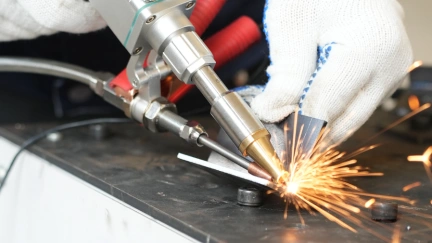
For a fabrication shop, the attraction is practical: concentrated heat, fast seam production and less distortion on suitable work. That can mean less time straightening panels or finishing visible welds. The process serves everything from handheld sheet-metal work to automated battery assembly.
What Is Laser Beam Welding?
Laser beam welding, or LBW, is the technical name for laser welding. The beam supplies the heat that creates the joint.
In metal fabrication, it is a fusion-welding process: the material melts locally and then solidifies. Welding without added material is called autogenous welding; wire-fed welding introduces filler into the molten pool. Purpose-built laser systems also join thermoplastics.
How Does Laser Welding Work?
Step 1.The operator sets the welding parameters on the touchscreen according to the material type and thickness.
Step 2. The control system sends a signal.
Step 3. The laser source emits a laser beam.
Step 4.The laser beam is transmitted through the optical fiber to the welding head.
Step 5.The welding head focuses the laser beam and controls its travel path.
Step 6. A high-temperature molten pool forms on the workpiece.
Step 7. After a brief cooling period, the weld solidifies and the welding process is complete.
Conduction Welding vs Keyhole Welding
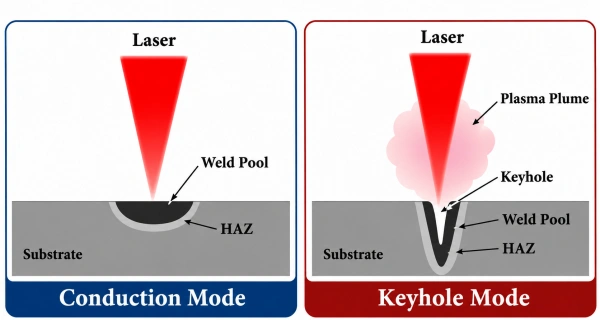
Conduction laser welding heats the surface, with heat flowing into the surrounding material. It produces relatively shallow, broad welds.
Keyhole laser welding uses higher power density to vaporize a small volume of metal. The resulting cavity lets energy reach deeper into the joint, producing a narrower, deeper weld.
TWI’s explanation of laser welding describes these two operating modes. twi-global.com
What Is the Laser Welding Process?
What is laser welding process control? In practical terms, it means managing preparation, beam settings and inspection so that successive parts meet the same requirements.
Joint Preparation
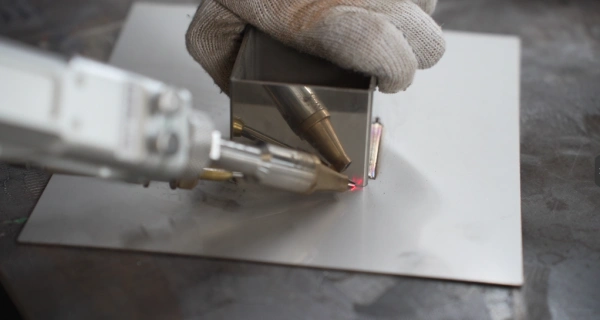
Laser welding joint preparation starts with clean surfaces and consistent fit-up. Remove oil, dirt and troublesome surface coatings, prepare the edges, and clamp the parts securely.
Control the gap along the entire seam. A narrow beam offers little help when the joint moves outside its path.
On a thin enclosure, a lifted corner changes the beam’s relationship to the joint. Fix the fit-up before changing power.
Parameter Setup and Welding
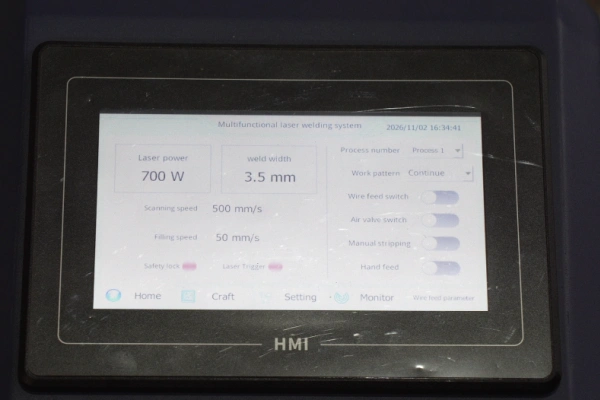
Set laser power, travel speed, focus position and shielding gas. For a wobble head, set the scan pattern and width. For wire-fed welding, set the filler type, diameter and feed rate.
Establish laser welding parameters on a representative joint. Keep the head position and travel consistent throughout production.
Weld Inspection
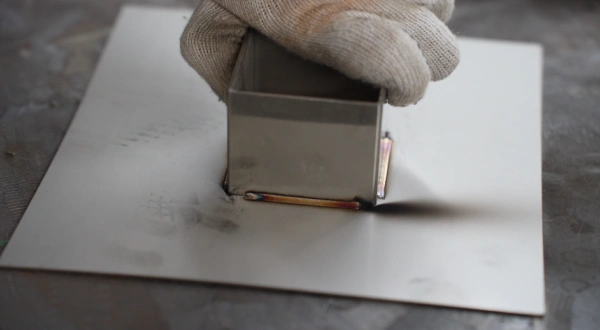
Laser weld inspection checks bead shape, undercut, cracks, dimensions and fusion. Cross-sections reveal penetration and internal geometry; mechanical or leak tests assess the properties specified for the component.
A clean-looking surface is useful evidence of appearance, not proof of internal quality.
Define acceptance before a batch starts. An enclosure that must remain leak-tight needs a different check from a bracket being inspected for load capacity.
What Is a Laser Welder?

What is a laser welding machine? It is the complete equipment package that generates, delivers and controls the welding beam.
1. Laser Source
Generate a laser.
2. Laser Welding Head
It is transmitted via a flexible optical fiber to the handheld welding torch, where an optical lens inside the torch head focuses it into a light spot.
3. Touch Screen
Used to adjust laser welding parameters.
4. Automatic Feeder
Auxiliary equipment used to fill weld gaps, thicken weld beads, enhance weld strength, and improve the welding process.
5. Water Chiller
Continuously cool the laser and the welding torch lens to prevent high temperatures from damaging the optical components and ensure stable laser output over extended periods.
6. Safety Ground Clamp
The safety clamp must be secured to the workpiece being welded; the laser will only be emitted when the welding torch makes contact with the workpiece, thereby completing the circuit. This is a safety measure designed to prevent accidents caused by the laser being emitted when the torch is pointed at people, animals, or flammable materials.
7. Optical Cable of the Laser Welding Head
Regarding the length of the torch cable: The length of the torch cable depends on the length of the fiber optic cable and the length of the torch system control cable. Taking Super Strong Weiye as an example, the default length of the torch control cable is 10 meters (with 12-meter and 15-meter options available); when combined with the length of the cabling inside the machine, the maximum length that can extend outside the machine is 9 meters.
When comparing MAGICK laser welding machines, look beyond output power. Head access, wire feeding, cooling, electrical supply and the workpiece all affect how the equipment fits into a shop.
What Is Fiber Laser Welding?
Fiber laser welding uses a laser whose light is generated and amplified in a doped optical fiber. The beam is then delivered to the welding head and focused onto the joint.
Industrial fiber lasers combine efficient electrical-to-optical conversion, compact construction and flexible beam delivery. They are widely used in handheld welders and automated metalworking systems.
“Fiber” identifies the laser-source technology. “Handheld” identifies how the welding head is moved. A fiber laser welder can therefore be handheld, robot-mounted or integrated into a dedicated production machine.
Beam wobble is a separate feature: it moves the focused spot across a set pattern. This distributes heat over a wider area without changing the underlying laser-source technology.
What Materials Can Be Laser Welded?
Common laser welding materials include carbon steel, stainless steel, aluminum, copper, nickel alloys and titanium. Each brings its own preparation and process demands.
Steel, Aluminum, Copper and Titanium
Laser welding steel is common in sheet-metal fabrication and automotive production. Carbon steel and stainless steel need different parameter sets; coatings also affect joint preparation.
Laser welding aluminum demands attention to oxide removal, heat conduction and alloy chemistry. Filler selection is especially important for crack-sensitive alloys.
Laser welding copper serves electrical connections and battery components. Its reflectivity and thermal conductivity make stable energy absorption a central process issue.
Laser welding titanium requires effective inert-gas protection of the molten pool, weld root and hot trailing material to prevent atmospheric contamination.
What Is Laser Welding Used For?
Laser welding applications range from small electrical contacts to long seams in fabricated assemblies.
| Industry | Typical laser welding uses |
|---|---|
| Automotive | Body components, transmission parts and structural assemblies |
| Batteries and electrical equipment | Tabs, busbars and electrical connections |
| Sheet-metal fabrication | Cabinets, enclosures, frames and housings |
| Medical manufacturing | Instrument components and sealed device housings |
| Aerospace | Precision components and thin-walled assemblies |
| General manufacturing | Stainless-steel products, furniture and appliance parts |
The production benefit is clearest on repeat joints where seam quality, distortion or finishing time creates a bottleneck. A faster weld is valuable; a part that moves directly to the next operation is more valuable still.
Advantages and Limitations of Laser Welding
The main laser welding advantages and disadvantages become clear at the workbench.
Concentrated heating helps control distortion. High travel speeds shorten suitable seam operations. Programmed motion supports repeatable paths, and narrow welds can reduce finishing work on visible surfaces.
The trade-offs are equally concrete. Equipment and safeguarding add upfront cost. Close fit-up and accurate beam positioning matter. Reflective materials need compatible laser systems. Filler and wobble expand the process window, but they do not remove the need for proper joint preparation.
Laser Welding vs TIG and MIG
For laser welding vs TIG, compare repeatability, finishing work and the need for hands-on pool control. For laser welding vs MIG, compare seam requirements with filler-deposition needs.
| Süreç | Practical strength | Main production consideration |
|---|---|---|
| Laser welding | Concentrated heat and efficient repeat seams | Fit-up, positioning and laser safeguards |
| TIG welding | Precise manual control for detailed work and repairs | Operator skill and welding time |
| MIG welding | Continuous wire feeding and productive filler deposition | Wire delivery, heat input and bead cleanup |
A workshop does not need to replace every TIG or MIG job with laser welding. Start with the recurring work where the existing process costs the most time.
Sık Sorulan Sorular
Is Laser Welding Strong?
Yes. Sound laser welds are used in load-bearing assemblies. Strength comes from adequate fusion, suitable metallurgy and control of defects. Verify the joint against the component’s mechanical requirements; bead appearance alone does not establish strength.
Does Laser Welding Require Filler Wire?
No. Autogenous welding joins the base material directly. Laser welding filler wire adds material, helps bridge controlled gaps and adjusts weld-metal chemistry. The joint design and alloy establish whether filler is part of the procedure.
Does Laser Welding Use Shielding Gas?
Shielding gas is standard in many metal laser-welding operations. Argon, helium and, for suitable materials, nitrogen protect the molten region from atmospheric contamination. Gas selection and coverage belong in the welding procedure.
Is Laser Welding Safe?
Laser welding safety requires engineered controls. High-power welding lasers create eye and skin hazards, including from reflected beams. Use a suitable interlocked enclosure or controlled laser area, specified laser-rated protection, fume extraction and trained operators. An ordinary arc-welding helmet alone is not adequate laser protection.
Sonuç
What is laser welding worth on your production floor? Find out with a joint you already make.
Record the current time spent welding, straightening, finishing and inspecting it. Then compare accepted parts from a laser trial. Bring MAGICK the material, thickness, joint drawing and batch quantity when you request a welding sample. That gives the machine discussion a concrete starting point.